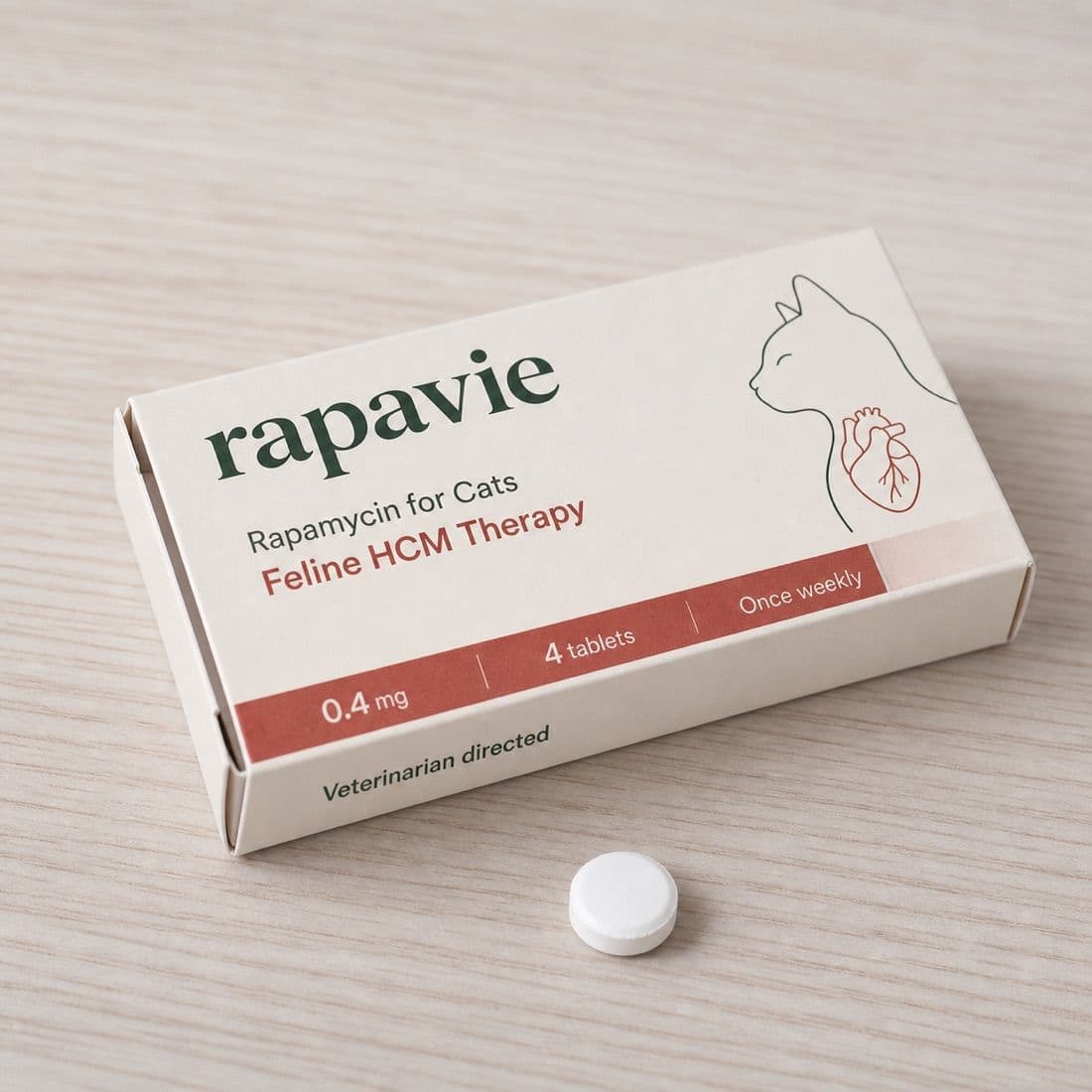
Rapamycin for Cats — Feline HCM Therapy
For cats diagnosed with hypertrophic cardiomyopathy. The same weekly rapamycin protocol, positioned around the heart — veterinarian-directed, alongside your cardiologist.
For the diagnosis you did not want
Hypertrophic cardiomyopathy is the most common heart disease in cats, and most owners hear the word for the first time in a cardiologist’s room. There is no cure, and until recently there was little to offer beyond monitoring. That is beginning to change.
What rapamycin therapy actually costs
Shown in your local list price. You are charged this amount at checkout.
Prescription medicine. Your order begins with a licensed veterinarian’s review — nothing is dispensed without it.
What the research actually shows
Rapamycin — an mTOR inhibitor studied for over fifty years — is being investigated in feline HCM because the pathway it acts on is involved in how the heart muscle thickens. A masked, placebo-controlled clinical trial in cats with subclinical HCM found low-dose rapamycin was safe and feasible, with early signals worth pursuing. This is an area of active study, not a settled treatment. No medicine anywhere is licensed to treat feline HCM, and nothing here is a promise that rapamycin will change the course of the disease.
Where this fits
- It does not replace your cardiologist. Rapavie’s veterinarians work alongside your cat’s existing cardiac care, not instead of it.
- It is for owners who have discussed rapamycin with their vet and want it prescribed and monitored properly.
- Echocardiography and bloodwork stay with your own veterinary team; we ask to see them so dosing and monitoring are safe.
How the therapy works
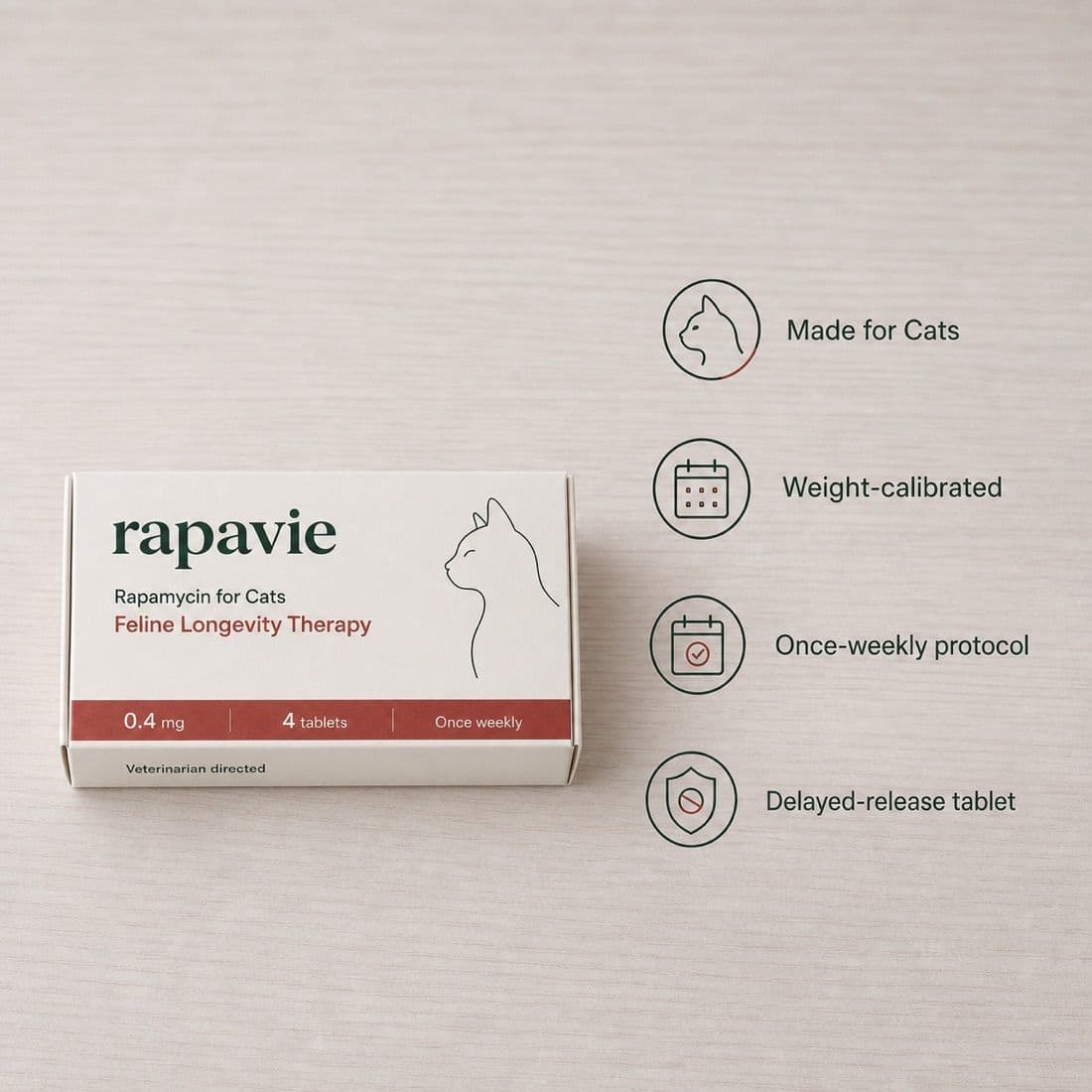
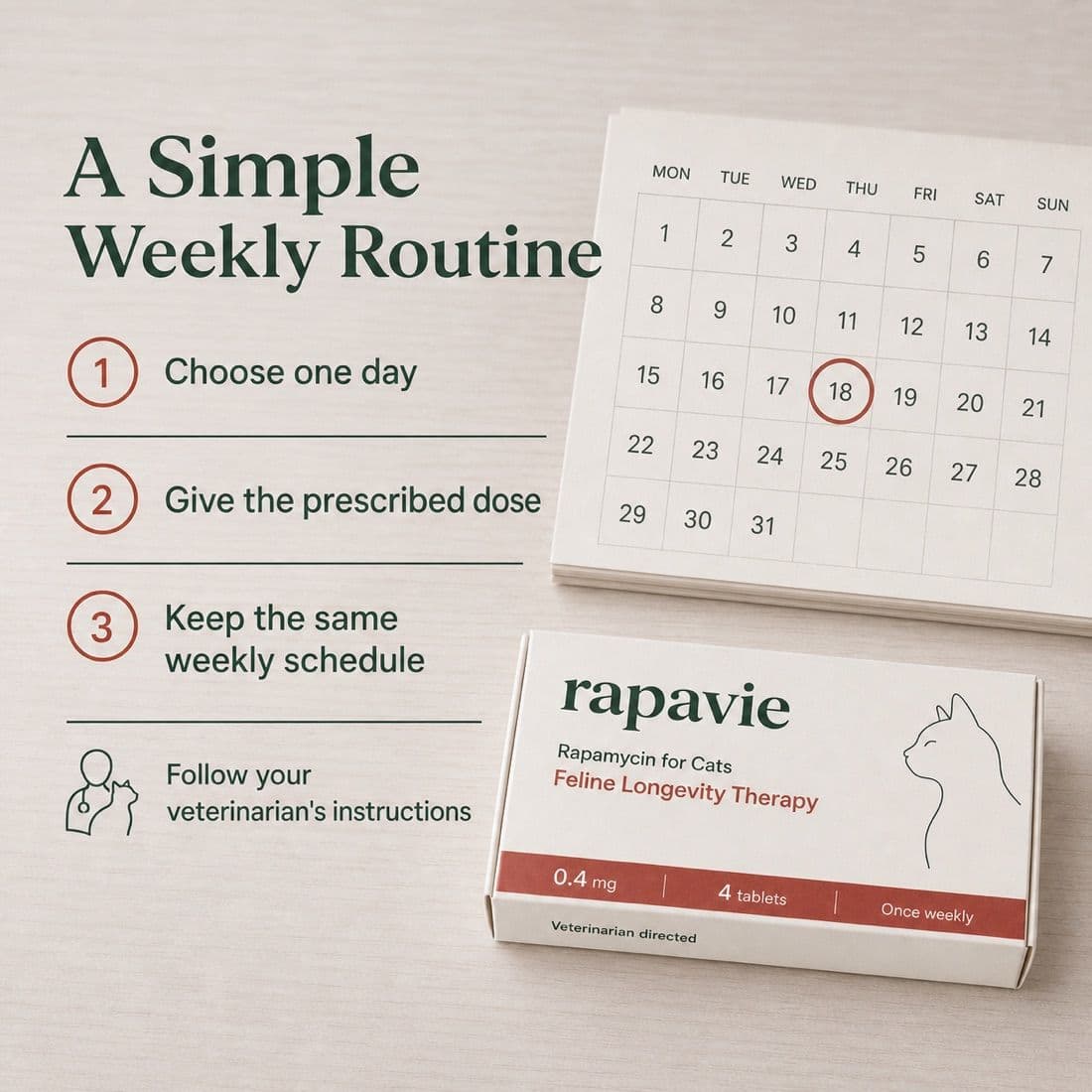
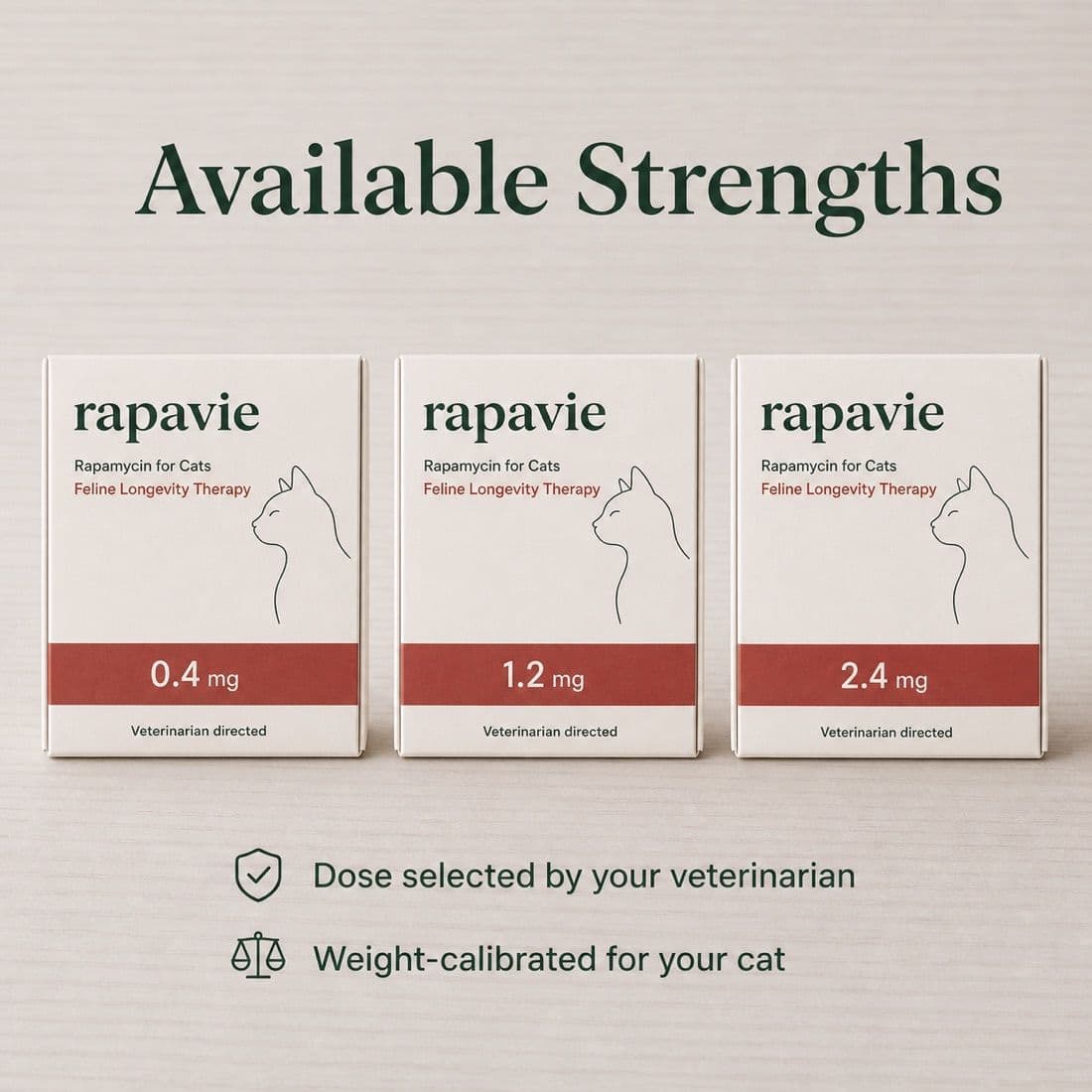
One delayed-release, acid-resistant tablet once a week, with food — the same protocol as our feline longevity therapy, calibrated to your cat’s body weight (0.4 mg, 1.2 mg or 2.4 mg). Flavored oral suspensions are available for cats that refuse tablets.
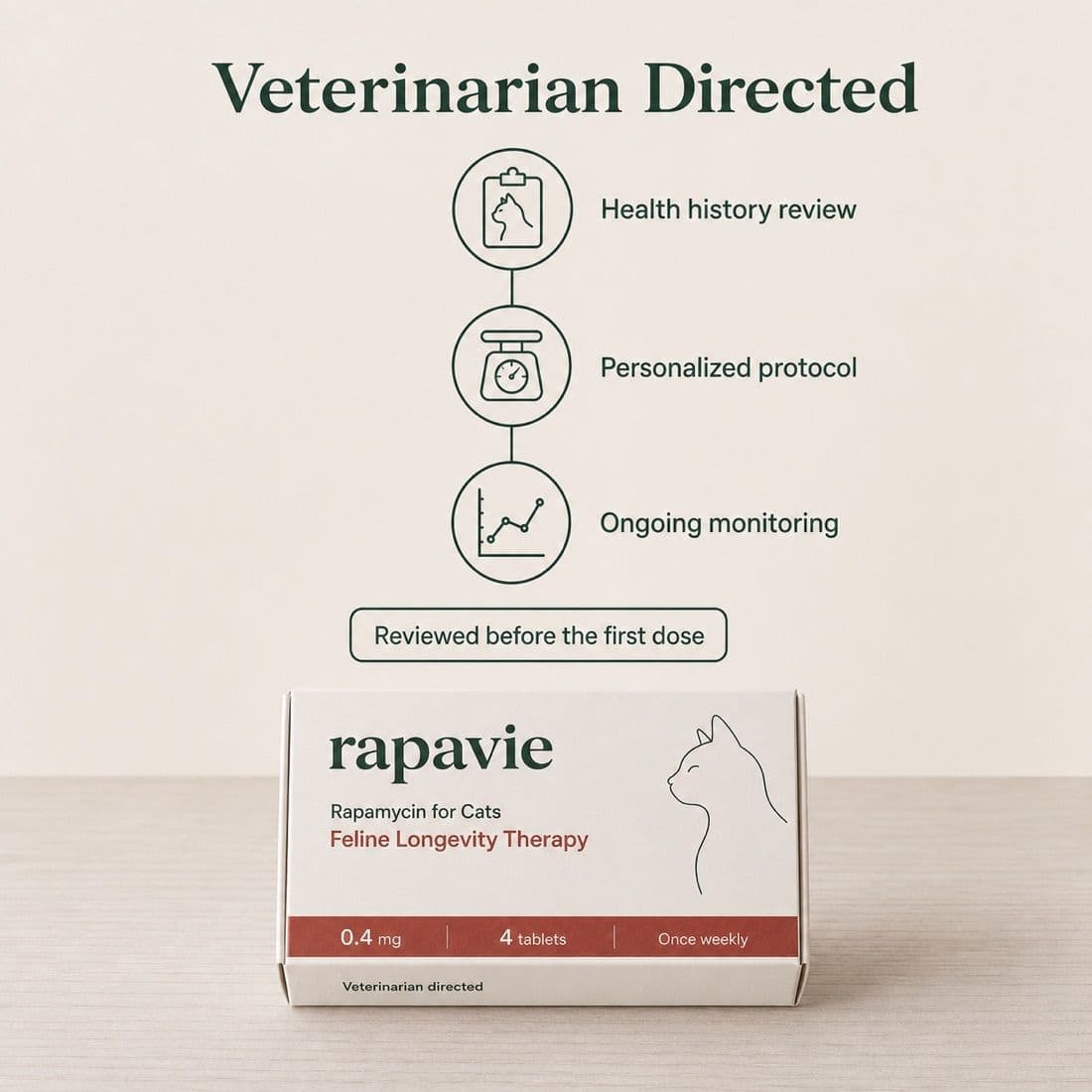
Veterinary oversight, included
Every order begins with a licensed veterinarian’s review of your cat’s history and cardiac workup, personalized dosing, and monitoring guidance. Cats with certain conditions are not candidates, and the review checks for them. Medication is dispensed under veterinary prescription. Lab-tested to a 99.9% purity standard.
Product information
| Indication | Positioned for cats diagnosed with hypertrophic cardiomyopathy (HCM) |
|---|---|
| Evidence | Under clinical investigation in feline HCM — not a licensed treatment |
| Form | Delayed-release, acid-resistant tablet |
| Strengths | 0.4 mg · 1.2 mg · 2.4 mg, chosen by body weight |
| Schedule | Once weekly, with food |
| Alongside | Works with your cardiologist’s care, not instead of it |
| Purity | Lab-tested to a 99.9% standard, every batch |
| Status | Prescription medicine, dispensed under veterinary direction |
Rapavie and Rapamune are the same molecule, not the same medicine
Rapamune is the human transplant product. People find it when they search sirolimus, and the difference is worth a minute.
| Rapavie | Rapamune (human) | |
|---|---|---|
| Form | Delayed-release, acid-resistant tablet | Immediate-release tablet |
| Dosing | Once weekly, with food | Every day |
| Licensed for | Prescription medicine, dispensed under veterinary direction | Human kidney-transplant patients |
| Splitting | Not needed — the strength is dispensed to your animal's weight | Labelled to be swallowed whole — not crushed, chewed or split |
📦 Shipping time & tracking
- Every parcel ships fully tracked — the tracking number is emailed the moment the label is created.
- Flat €30 shipping worldwide, shown up front — no surprise fees at checkout.
- Your box ships once the veterinary review clears; the delivery windows below are counted from dispatch.
What cat owners say
Individual results vary. These are members’ own experiences, not medical claims or expected outcomes.
Miso is 14 and honestly moves like she did at 8. The vet check-ins make me feel like we’re doing this properly.
The onboarding was so thorough — real vets, real answers. Pamuk approves of the therapy too.
Sisu was diagnosed with early HCM. Between our cardiologist and the Rapavie vets, we finally feel like we are doing something instead of waiting.
What sold me was the honesty. They were clear that it is a prescription medicine reviewed by a vet, not a supplement. That is exactly why I trust it.
The quarterly lab reviews make me feel like my cat has a whole care team. Being able to message a vet the same day is worth it on its own.
Yuki refuses every tablet ever invented, so the flavoured suspension was the deciding factor. Dosing morning is no longer a wrestling match.